


Nexalviropa
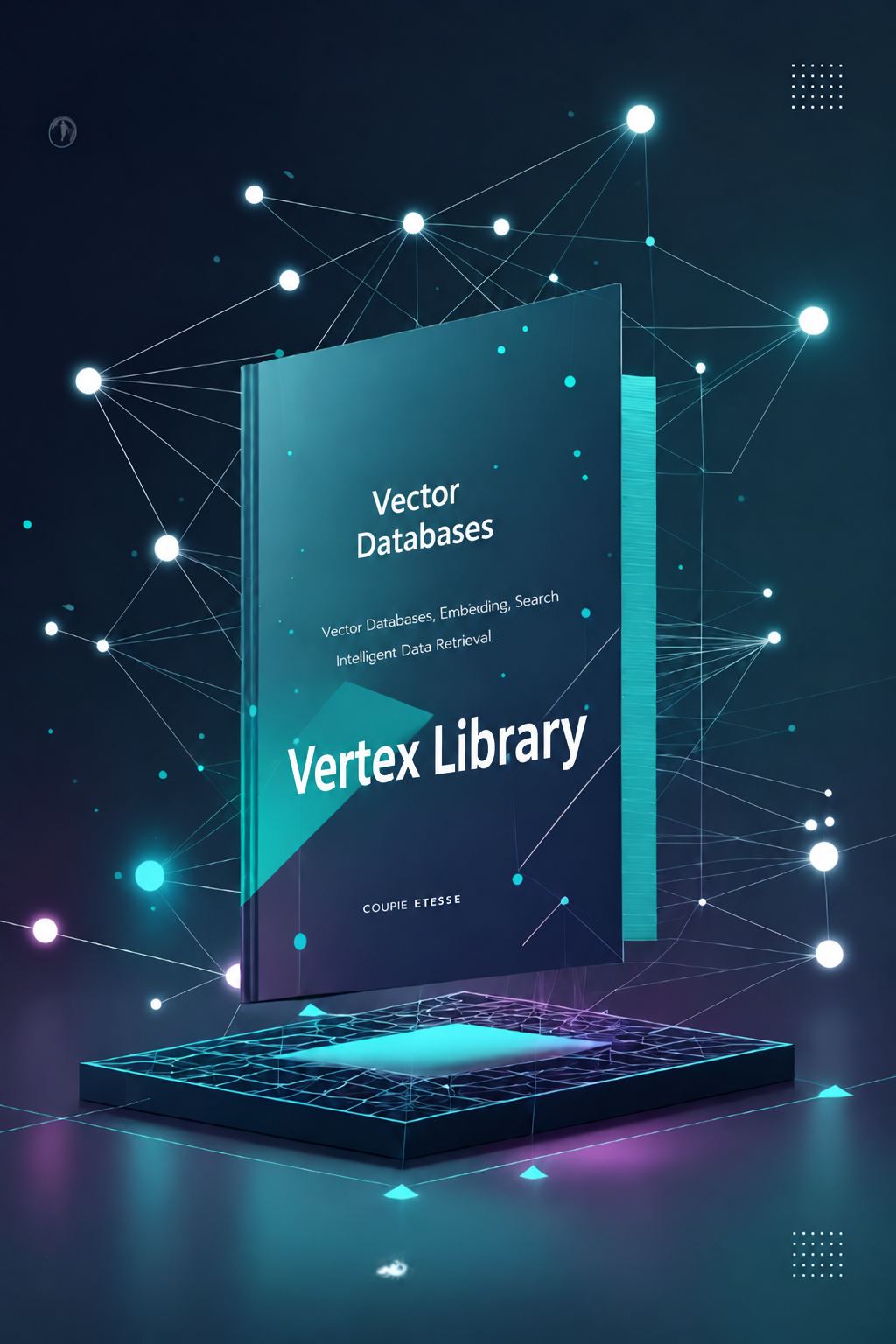
Vertex Library
Vertex Library
Couldn't load pickup availability
- ⬇️ Digital file available after purchase
- 🗂️ Long-term availability
- 🔒 Secure checkout
- 🗓️ Content updated in 2026
Self-paced learning overview
Problem Statement
As vector database systems become more detailed, learners need to understand not only how vectors are indexed and retrieved, but also how larger collections are organized, maintained, and queried under different conditions.
At this stage, it is common to understand the purpose of similarity search and indexing while still finding it difficult to connect collection structure, metadata, query filtering, index behavior, and record management into one clear workflow.
Vertex Library focuses on that broader organizational view.
Solution
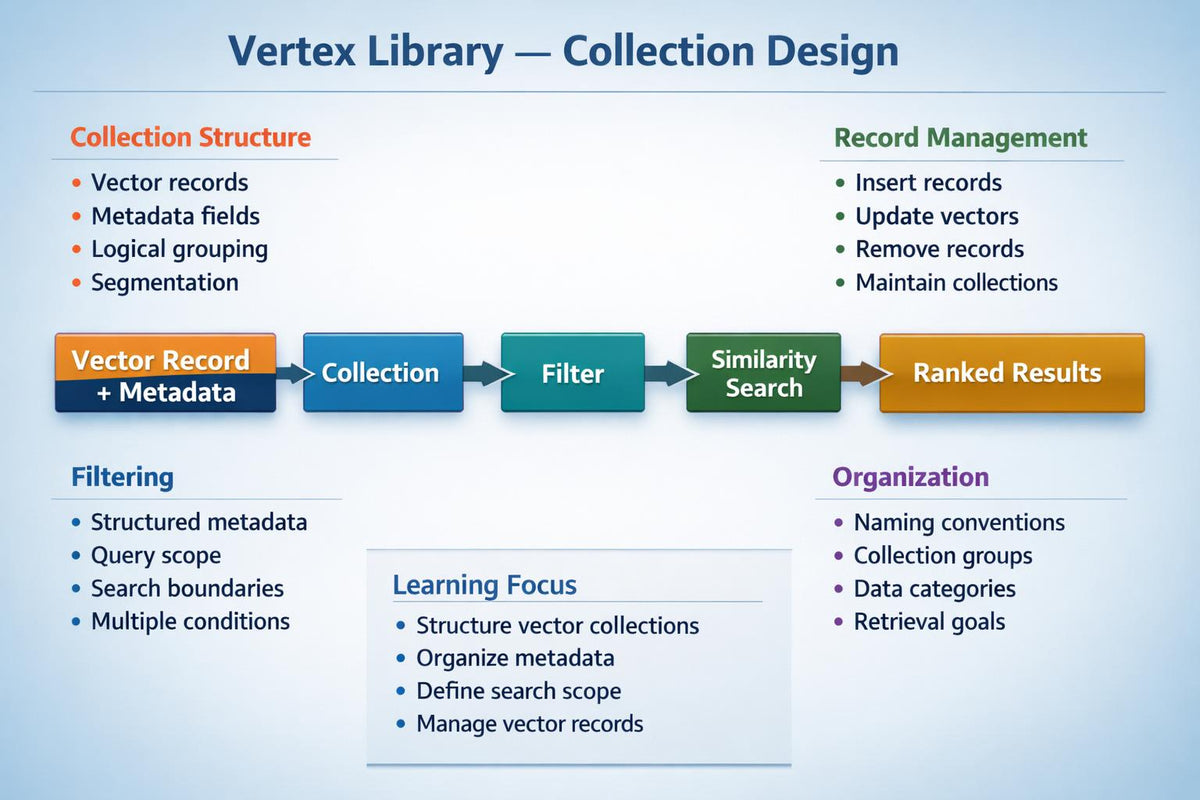
Vertex Library develops a more detailed understanding of vector collection design and the relationships between stored vectors, metadata, indexes, and search conditions.
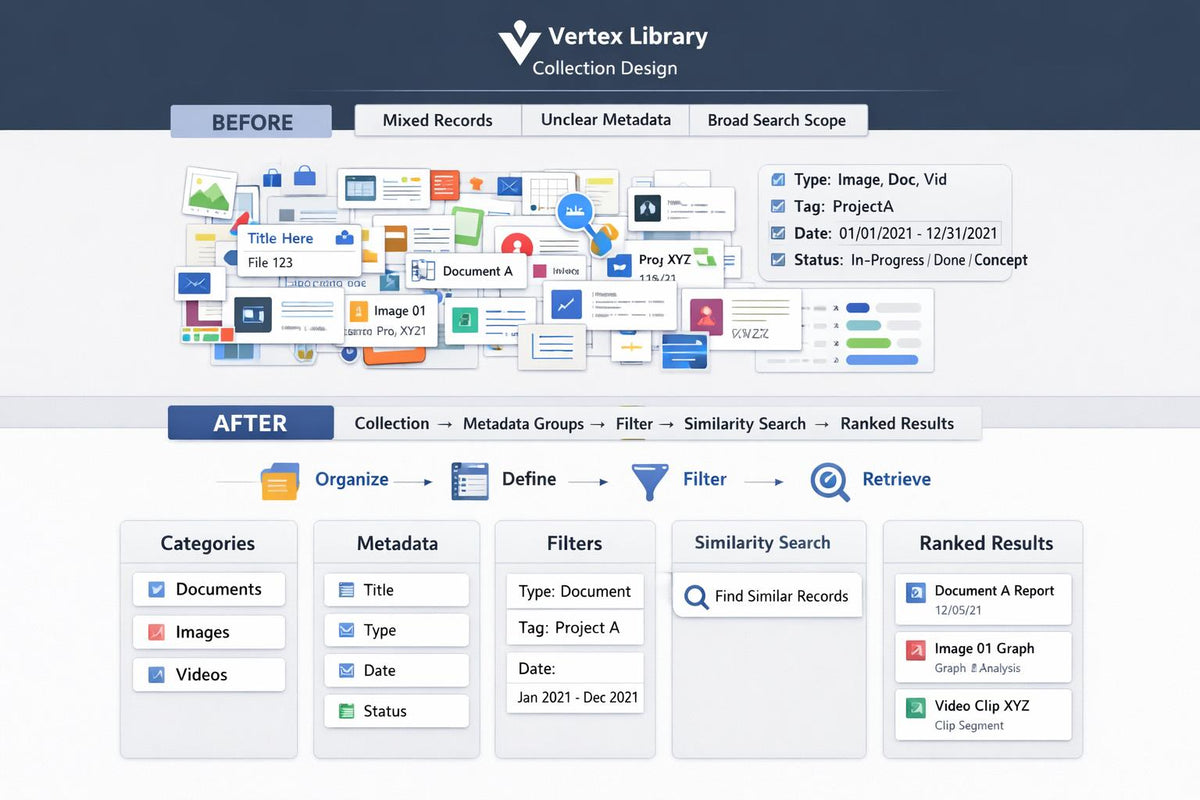
The course examines how vector records can be grouped, labeled, filtered, updated, and prepared for different retrieval tasks. It also explores how organizational decisions can influence the way search queries are processed and interpreted.
The material is structured to help learners see a vector database as a complete data system rather than only a search mechanism.
What’s Inside
Vertex Library includes detailed sections covering:
- Vector collection structure
- Record organization
- Metadata fields and attributes
- Naming and grouping conventions
- Collection segmentation
- Filtering strategies
- Structured metadata conditions
- Vector and metadata relationships
- Record insertion concepts
- Updating stored vectors
- Removing records
- Index refresh concepts
- Collection maintenance
- Query scope
- Search boundaries
- Combining multiple conditions
- Result ranking with structured filters
- Organizing collections for different retrieval goals
- Reviewing collection design choices
The course also includes structured examples showing how vector data and metadata can work together during storage, filtering, retrieval, and record maintenance.
Who Is This For?
Vertex Library is intended for learners who already understand basic vector search and indexing concepts and want to study vector collection organization in greater detail.
It may be useful for:
- Learners studying vector database structure
- Developers exploring collection design
- Students interested in search-oriented data systems
- Technical learners working with metadata and filtering
- People studying record organization and maintenance
- Learners preparing for more detailed retrieval architecture topics
Familiarity with vectors, similarity search, metadata, filtering, and introductory indexing concepts is recommended.
What You’ll Learn
By working through Vertex Library, learners can:
- Describe how vector collections can be structured
- Explain the role of metadata in vector records
- Organize vector records using logical fields and groups
- Understand collection segmentation concepts
- Describe how structured filters can narrow search scope
- Connect metadata conditions with similarity-based retrieval
- Explain how records can be added to a collection
- Understand basic vector update workflows
- Describe record removal concepts
- Recognize when index refresh or maintenance may be needed
- Define query scope within a vector collection
- Understand how search boundaries can be applied
- Combine multiple structured conditions
- Explain how filtered candidates can move into similarity ranking
- Compare different collection organization approaches
- Review a vector collection using structure, metadata, and retrieval criteria
Refund Information
Paid Nexalviropa courses are covered by the applicable 30-day refund policy described in the store terms.
Learners should review the complete refund conditions before purchase for details about eligibility, timing, and the process for submitting a request.
Share
What topic do the Nexalviropa courses cover?
What topic do the Nexalviropa courses cover?
Nexalviropa courses focus on vector databases and the concepts surrounding vector-based data organization. The materials introduce terminology, structures, indexing ideas, similarity-based retrieval, embeddings, and related database concepts in a structured educational format.
Do I need previous experience with vector databases?
Do I need previous experience with vector databases?
No previous experience with vector databases is required for the introductory materials. The learning path begins with foundational ideas and gradually introduces more detailed concepts. Learners with prior database knowledge can also use the materials to organize and expand their understanding of vector-based systems.
How are the course materials organized?
How are the course materials organized?
Each course is divided into focused sections that connect related ideas in a logical sequence. Topics are introduced with explanations, terminology, examples, and practical reasoning exercises designed to help learners understand how different vector database components relate to one another.



Have a Question in Mind?
Contact our team about course materials, learning topics, general information, or anything else related to Nexalviropa.
- Choosing a selection results in a full page refresh.
- Opens in a new window.